
“I want to experience my girlhood with confidence” – the Zimbabwean shelter helping survivors to rebuild their lives

HARARE, Zimbabwe - Musasa is a non-governmental organization that works to prevent and respond to gender-based violence. It provides temporary shelters to survivors of violence across Zimbabwe and supports them with psychosocial counselling, legal support, medical assistance and skills-building training.
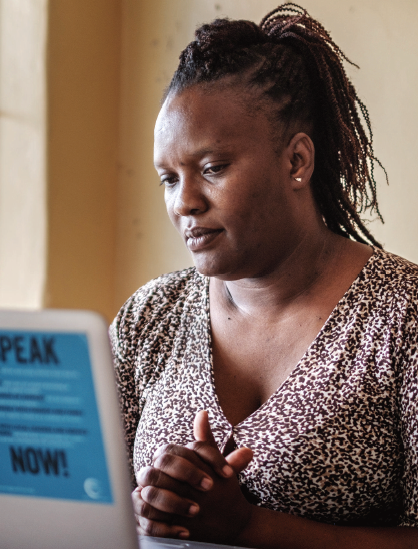
Priscah Ferreti
Head of Administration at Musasa Shelter
On average, 400 to 500 survivors will pass through the shelter a year. People with fast-moving cases sometimes just need overnight accommodation and some people will stay with us for two weeks. However, cases that involve physical abuse and sexual assault tend to take long in the courts so we will have survivors who stay with us for up to six months.
The nice thing about our shelter is that it is anonymous, so nobody knows where we are located. We also put in different types of security measures such as adding an alarm system and having the place covered in barbed wire. The residential area that we are in is also aware of who we are and so is the nearest police station. They all help us in keeping the shelter safe.
Spotlight Initiative has been extremely helpful for us here because it did not limit us. It catered for everyone who came through our shelter.
Spotlight allowed us to have a holistic approach to the work we do by helping us provide counselling, medication and everything that a survivor might need. As a result, there was never a time when we had to turn someone away.
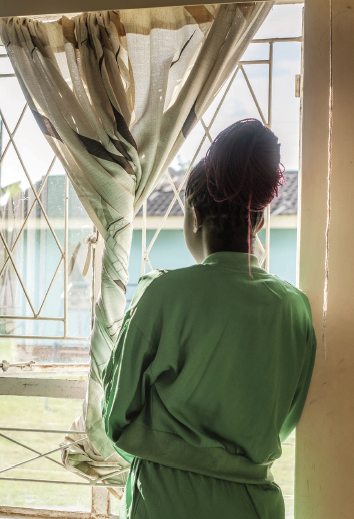
Rufaro*, 19, survivor
When I was 16, my father pressured me into marrying my first boyfriend, Martin, who was 35. I had told Martin that I was not ready to lose my virginity but one night he gave me a drink that made me dizzy and gave me a headache. I fell asleep immediately. I remember waking up the next morning and feeling pain between my legs. I explained to my mum how I lost my virginity, and she told me that what had happened was rape and she took me to the police station.
For a while, I did not see Martin but one day we saw each other on the street, and he asked me to come speak with him in his car and I went. He took my phone and threw it outside and drove away with me. He kept me for four months and I couldn't leave.
He started to become very violent with me, so I started running away to different friends’ homes. But Martin would pay my friends to tell him where I was, and he would come and get me. For 10 days, Martin beat me every night from midnight to 3 o’clock in the morning. I was in so much pain all the time, I couldn’t sleep. The day the police came to rescue me, Martin was getting ready to beat me in the kitchen. They had to break the door down.
They took me to the police station and because I had nowhere else to go, they took me to Musasa Shelter. When I got here, I was in so much pain; I couldn’t sleep, I couldn’t walk. The counselling sessions here at Musasa helped me a lot because I now have a strong support system.
Fortunately for me, Martin was arrested and found guilty. We are now just waiting to hear how long his sentence is going to be.
I want to go back to school. I am moving to a house near the shelter and I am now able to pay my own rent. I want to start a small business, too. I want to experience my girlhood again with confidence.
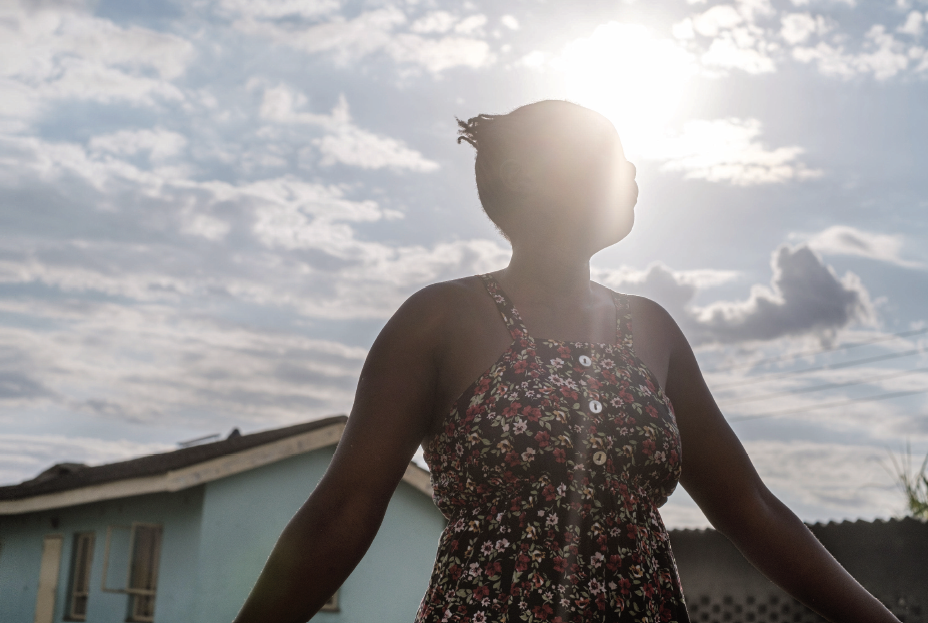
Tadiwa*, 26, mother to a child survivor of violence
Last year, as my 4-year-old daughter was walking home from school, she was kidnapped. The kidnappers raped her twice. They said they wanted her tongue and her nails for some rituals. She spent the night in the bush with her neck tied. The kidnappers were caught quickly because I recognized that one of them was carrying my daughter’s backpack.
At first, when the police spoke with them, they said that my daughter was dead but it wasn’t true. The police found her and we took her to the hospital, where we were referred to Musasa Shelter.
My daughter doesn’t talk, walk and cannot sit on her own. But with the help from the shelter, I feel like she is recovering bit by bit. Once a month, we visit a doctor who has offered to treat her for free.
She doesn’t cry as much as she used to.
*Name has been changed for privacy.
Extracted from 'Spotlight Initiative Africa Regional Programme: Stories of Change'.