
How community radio stations are raising awareness of FGM and violence against women and girls

GANTA, Liberia - Community radio stations are a key way of raising awareness about sexual and gender-based violence, and how to prevent and report it. Meet Ruth Jeffrey and Emmanuel S. Woleh, two radio station programmers who are making waves in Liberia.
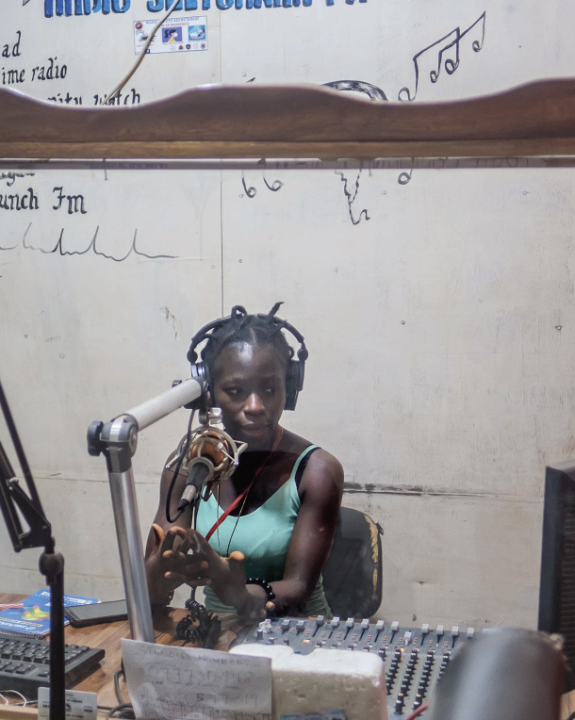
RUTH JEFFREY, 22
Director of Programming for Radio Sletorwah (Radio for the People)
I have been volunteering as a radio broadcaster since I was 17 and I graduated high school. I report the news and have a talk show about women’s issues. One of the important things I have been emphasizing is reporting crimes.
Often rape takes place within the family and the community hushes it up because of the stigma. We continually emphasize that it is essential to report such things to the police and not to sweep it under the carpet.
I really enjoyed the training we received under Spotlight Initiative. It was very interactive, and we learned about how to report on violence against women. It reminded me of the importance of being a woman who speaks on behalf of other women. I believe I speak more clearly and more boldly on my programmes about these issues as a result of the training.
"If you report these things, your radio station can be attacked."
The most difficult thing to report on is FGM because it is so entrenched in tradition and is a very emotional subject. There is a real danger that if you report these things, your radio station can be attacked. A group of Zoes (traditional practitioners of FGM) attacked and burned down one radio station that criticized FGM because they were upset with how the reporting was framed. There is a risk that if the traditional leaders are not happy with what you report they will come after you personally or attack the radio station and burn it down.
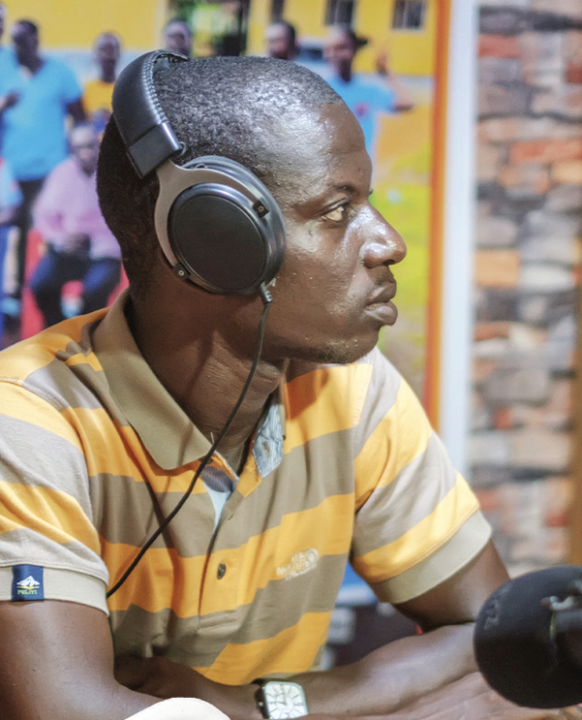
EMMANUEL S. WOLEH, 33
Director of Programming at The Voice of Gompa
Our radio station has been going for 14 years and was set up in part as a way of promoting peace and development in the aftermath of the Civil War. Our programming when it comes to gender issues emphasizes the importance of equity and inclusion in decision making, particularly at a political level. We encourage women to vote and stand for office.
The issue of gender-based violence is also vitally important. We engage the community to understand that in our generation, rape and domestic violence are not things that we can tolerate. We therefore encourage the equal treatment of women and the community to put a halt to violence against women.
We have programmes on women’s issues that allow women to share their experiences of life at home and in the workplace. We discuss the new Zoe (alternative livelihoods) programme, for example, and encourage people to see it as a positive replacement for what went before. We believe that this has helped to reduce FGM, because far fewer women now go into the bush, which is where this kind of thing happened.
"We have been bolder about tackling FGM, not as a passing issue, but as a key element of our community engagement."
Spotlight Initiative was very useful in terms of raising awareness about issues to do with gender-based violence. Thanks to Spotlight Initiative, we received training on how to address the sensitive issue of reporting on gender-based violence. We learned how to find new strategies and approaches.
As a result, we have been bolder about tackling FGM, not as a passing issue, but as a key element of our community engagement. By learning not to condemn but to encourage the abandonment of FGM, we can have a much more meaningful impact. Attitudes are really changing.
Extracted from 'Spotlight Initiative Africa Regional Programme: Stories of Change'.